
After running version 1.0 of Oscarlytics for several years, I decided to pivot it into a personal systems and data lab. However, the original stack presented several challenges:
- High resource footprint: Running Elasticsearch, despite its excellent index search capabilities, required a baseline memory usage of 1.5 GB to 2.5 GB RAM. For a budget VPS, this left virtually no room for other experiments.
- Security & Privileges: The entire Docker Engine daemon ran as
root, meaning container breakouts could compromise the host operating system. - Configuration overhead: Using Excel spreadsheets to manage project texts and articles made updates tedious and completely offline.
For this refactoring, I decided to define the architecture and strict standards myself, delegating the heavy lifting to my autonomous coding agent Gemini (Antigravity).
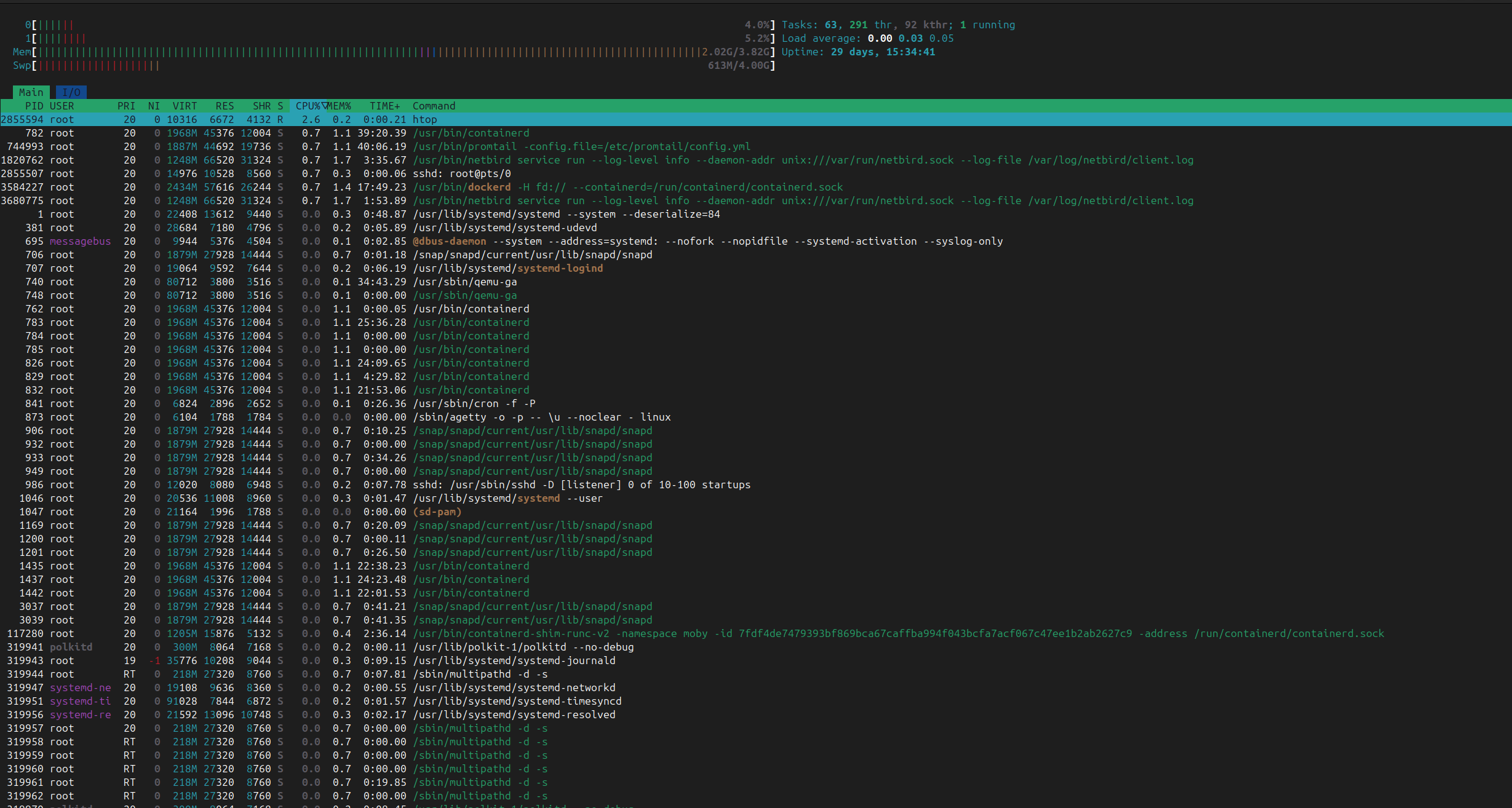 Fig 1. Screenshot showing memory and CPU usage (htop) on the previous Docker & Elasticsearch stack.
 Fig 2. Container stats on the original Docker-based system.
Action
To migrate to the 2.0 stack, we implemented the following system engineering changes:
- Replaced Elasticsearch with Meilisearch: Switched the search backend to Meilisearch. Being a lightweight, ultra-fast search engine written in Rust, we preserved rapid project search capabilities while reducing RAM usage to a tiny fraction.
- Migrated from Excel to Dynamic Markdown: Excel files were completely eliminated. Content is now authored in Markdown (
.md) files with Frontmatter. A startup Python script automatically parses and syncs these posts into the database and Meilisearch index. - User-space Orchestration via Podman Quadlets: Replaced the legacy
docker-composesetup with Podman Quadlets, integrated natively as systemd services. The pod runs isolated and without root privileges. - Hardened Container Configuration: Implemented strict hardening rules on each container:
- Configured
NoNewPrivileges=trueandDropCapabilities=ALLto prevent privilege escalations. - Mounted the Nginx and Flask filesystems as read-only (
ReadOnlyRootFilesystem=true). - Sourced clean and secure base images (Chainguard/Wolfi and minimal Alpine).
- ACME.sh Sidecar Automation: Placed ACME.sh in a helper container using the DuckDNS DNS-01 validation challenge, generating SSL certs automatically without needing to bind host ports 80/443.
- Distributed Observability and Monitoring: Designed and implemented a secure, distributed observability pipeline. On the
vps-prodserver, we deployed a system-level agent (Node Exporter), a Podman container metrics exporter, and a hardened rootless Promtail log aggregator, all co-located within a single monitoring Pod. These agents securely stream metrics and logs via a private VPN overlay network (NetBird) to a central node on Oracle Cloud Infrastructure (OCI). In OCI, the data is stored in Prometheus and Loki, and a unified master Grafana dashboard is provisioned programmatically via API, showcasing CPU/RAM usage per container, disk and network I/O, syslog/auth logs, and real-time Nginx web traffic statistics.
 Fig 3. Podman stats on version 2.0, showing a massive memory reduction.
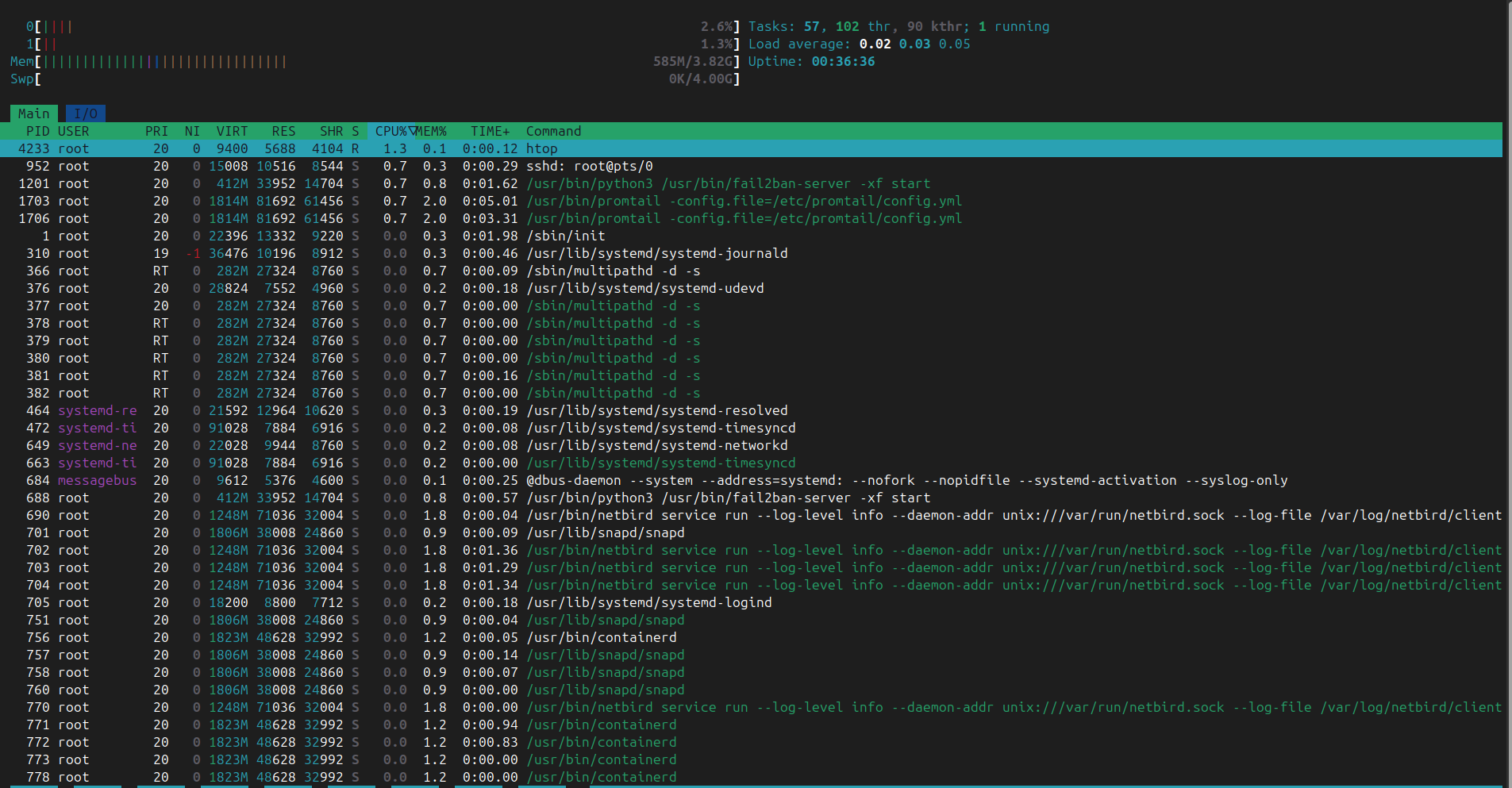 Fig 4. System load averages on the new Podman stack.
 Fig 5. Detail of host memory usage on the VPS with the new stack actively running.
Additionally, we ran HTTP benchmarking stress tests under concurrent load to evaluate latency and overall response capacity. The post-migration results show a substantial performance improvement, delivering much more stable response times, reduced latency, and zero packet loss due to the lightweight container environment and the optimized Nginx web server configuration.
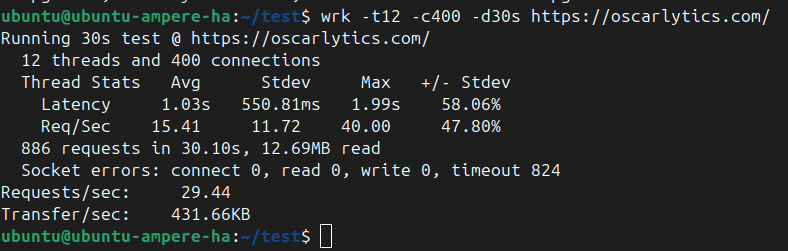 Fig 6. HTTP benchmarking tests on the legacy infrastructure.
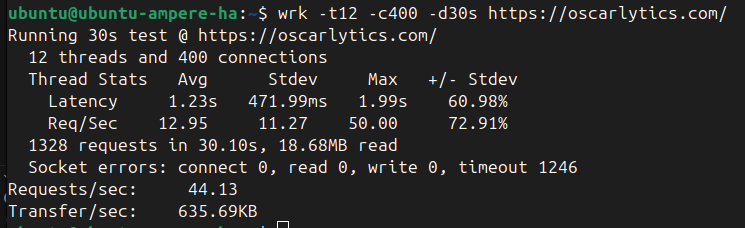 Fig 7. HTTP benchmarking tests after migration and optimization.
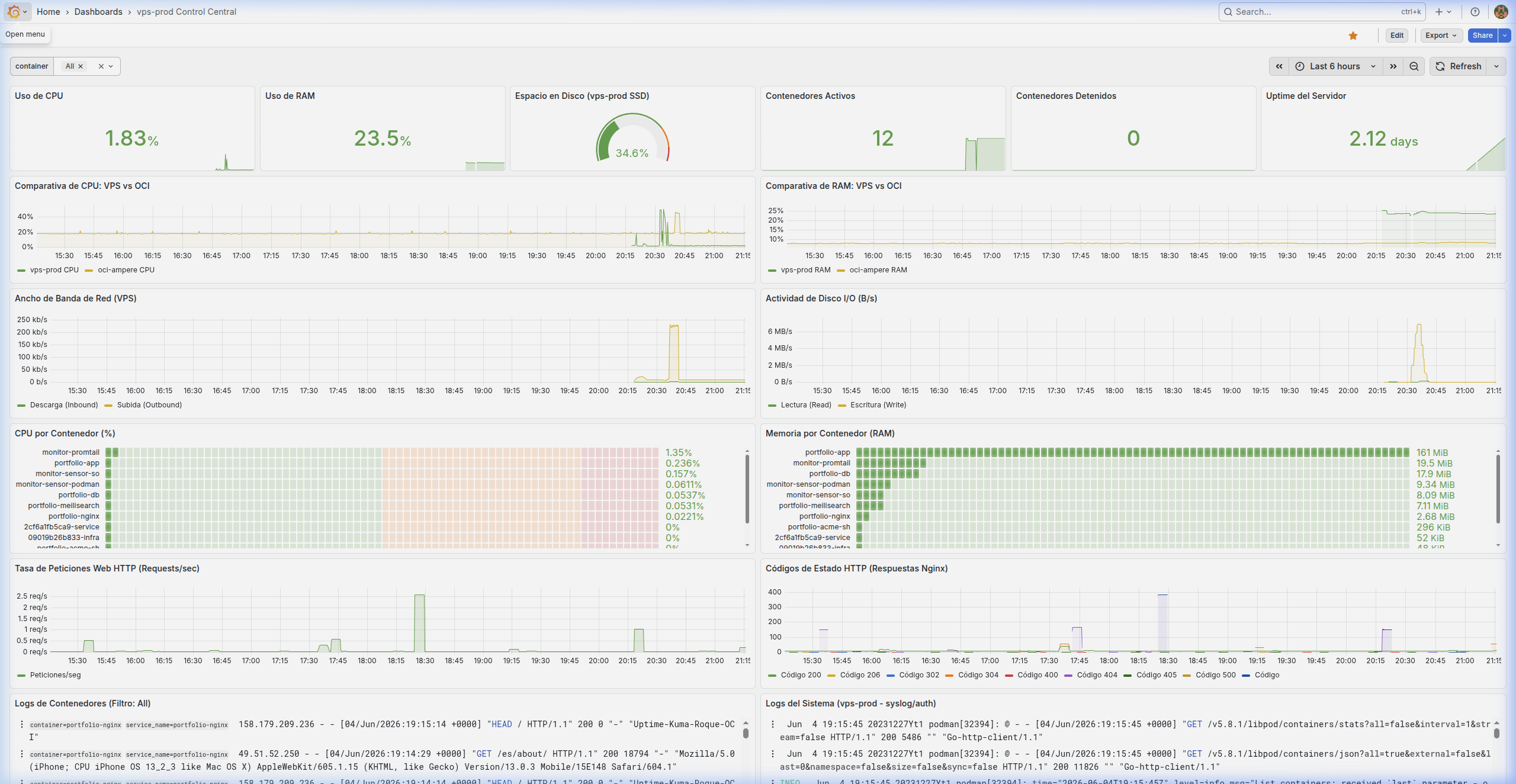 Fig 8. Consolidated master observability dashboard in Grafana showing performance metrics and log streams in real-time.
Resolution
The migration to Portfolio 2.0 has been a resounding success, delivering the following measurable results: - 90% RAM reduction: The entire stack idle usage dropped from ~1.8 GB to under 190 MB RAM. - Rootless operation: All containers and host service daemons run in user-space without sudo. - Fast Search Indexing: Meilisearch query times are in single-digit milliseconds, and CPU usage on the VPS host is near 0.1% at idle.
This project showcases how to design self-managed, hardened, and highly efficient stacks.
The source code and templates of this new version are available at My GitHub. If you want to read more about the original version 1.0 design (based on Docker and Elasticsearch), you can check the article for Portfolio 1.0.